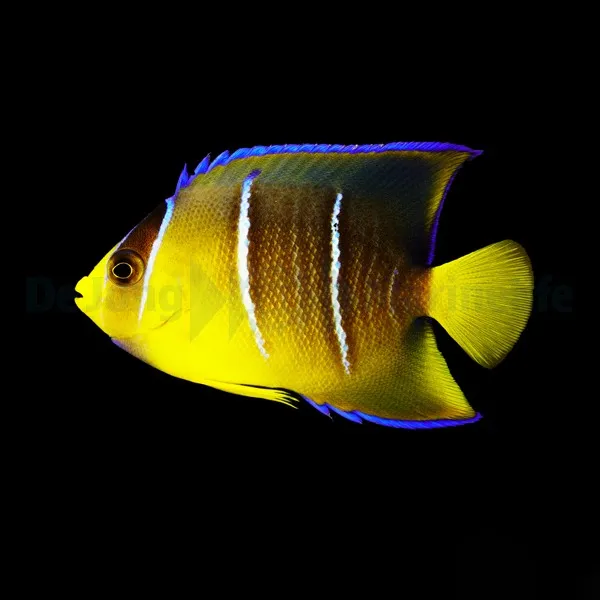
The Queen Angelfish (Holacanthus bermudensis) is a spectacular addition to any large marine aquarium, prized for its vivid blue and yellow colouring and graceful swimming behaviour. Native to the western Atlantic Ocean, this species can grow to a considerable size, making it suitable only for well-established, spacious tanks.
Care Level: Moderate to advanced. This angelfish requires stable water parameters and a well-maintained environment.
Temperament: Semi-aggressive. It can be territorial, especially towards other angelfish or similar-shaped species. Compatibility with other tank inhabitants should be carefully considered.
Diet: Omnivorous. Provide a varied diet including marine algae, sponges, mysis shrimp, and high-quality prepared foods formulated for angelfish to ensure optimal health and vibrant colouration.
Minimum Tank Size: 250 litres (approximately 65 gallons) or larger to accommodate its active swimming and territorial nature.
Reef Safe: With Caution. While generally peaceful towards corals, this species may nip at sessile invertebrates and some corals, so reef compatibility depends on individual behaviour and tank setup.
Lighting Requirements: Standard marine aquarium lighting is sufficient. Avoid excessive lighting that may stress the fish.
Water Flow: Moderate flow mimicking natural reef environments is ideal.
Placement: Provide plenty of hiding places with live rock formations to reduce stress and territorial disputes.
Origin: Western Atlantic, including Bermuda and the Caribbean Sea.
Maximum Size: Up to 45 cm (18 inches) in length.
FAQs
Q: Can Queen Angelfish be kept with other angelfish?
A: They can be territorial, so it is best to keep only one adult Queen Angelfish per tank or ensure a very large aquarium with plenty of hiding spaces.
Q: What is the best diet for Holacanthus bermudensis?
A: A varied diet including marine algae, sponges, mysis shrimp, and specialised angelfish pellets or flakes is recommended.
Q: Is this species suitable for reef tanks?
A: It can be kept in reef tanks with caution, as it may nip at corals and sessile invertebrates.