
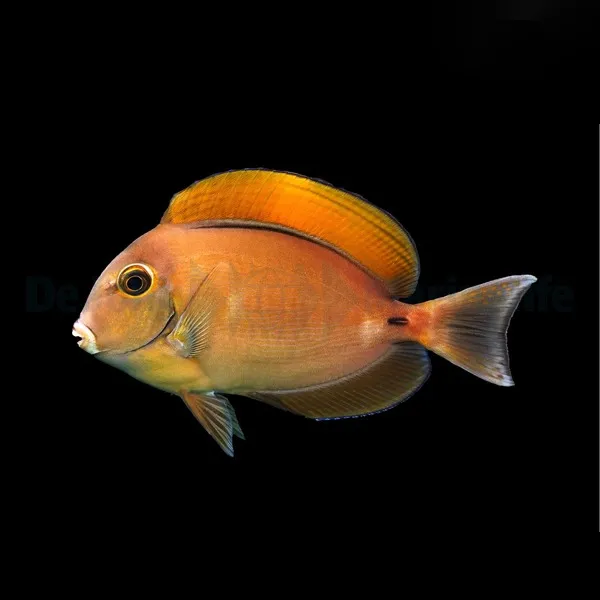
The Acanthurus bariene, commonly known as the Bariene Surgeonfish, is a large and visually impressive tang species prized by marine aquarium enthusiasts. This species is characterised by its elongated body, subtle yet attractive colouration, and distinctive surgeonfish scalpel located near the tail.
Care Level: Moderate to advanced. Due to its size and active nature, this species requires a well-established aquarium with stable water parameters.
Temperament: Generally semi-aggressive. It can be territorial, especially towards other tangs or similar-shaped fish, so careful consideration of tank mates is essential.
Diet: Primarily herbivorous. Provide a varied diet rich in marine algae, seaweed sheets, and specialised herbivore pellets. Supplement with occasional meaty foods to ensure balanced nutrition.
Minimum Tank Size: A minimum of 250 litres (approximately 65 gallons) is recommended to accommodate its active swimming and territorial behaviour.
Reef Safety: With Caution. While generally reef safe, it may nip at certain sessile invertebrates or corals, so monitor behaviour closely in reef setups.
Lighting Requirements: Standard marine aquarium lighting is sufficient. No special lighting needs beyond what supports healthy algal growth for grazing.
Water Flow: Moderate to strong water movement mimics natural reef environments and supports fish health.
Placement: Provide ample open swimming space with plenty of live rock for grazing and hiding. Avoid overcrowding to reduce stress and aggression.
Origin: Indo-Pacific region.
Maximum Size: Up to 40 cm (approximately 16 inches) in length.
FAQs
- Is the Acanthurus bariene suitable for beginner aquarists?
- Due to its size and temperament, it is better suited for intermediate to advanced hobbyists with experience in maintaining large marine tanks.
- Can it be kept with other tangs?
- It can be territorial; introducing multiple tangs requires a very large tank and careful monitoring to prevent aggression.
- What is the best diet for this species?
- A herbivore diet rich in marine algae and supplemented with quality herbivore pellets and occasional meaty treats is ideal.

Reviews
There are no reviews yet.